Fixtures for leak and pressure testing
Tubes, fittings, valves and housings have to be leak-tight before they are installed. A leak test fixture locates the part, seals its openings with sealing adapters and connects it to your leak tester. CAD-IS designs and builds these fixtures as one-offs for your part, from a simple manual station to a multi-station fixture, in-house in Karben near Frankfurt, Germany.
Sealing adapters matched to the port
Every adapter is designed for the geometry of your port: tube end, flare, thread, push-fit connector or bore. The fixture seals reliably without damaging sealing faces.
Several parts per cycle
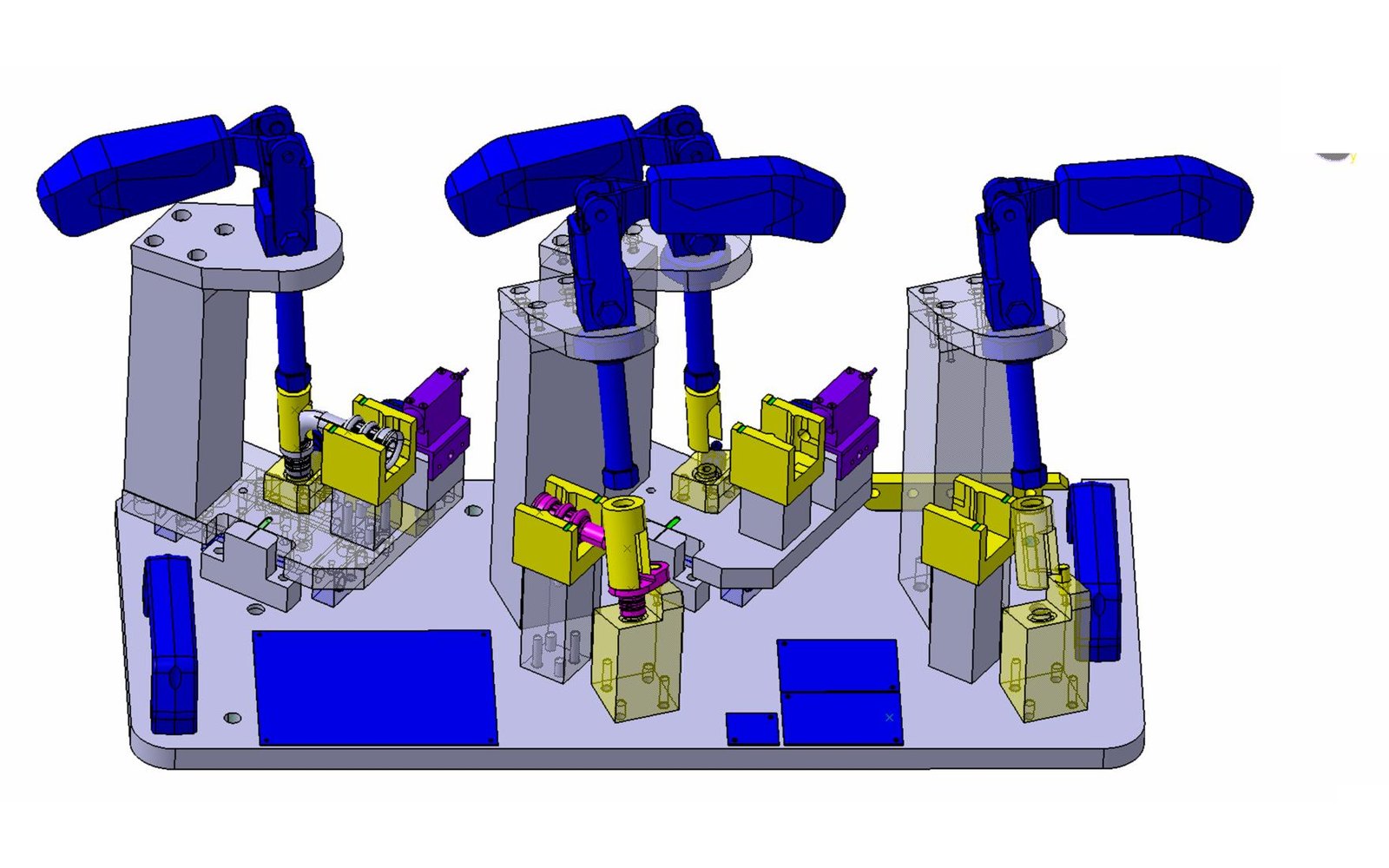
Several test stations can sit on one base plate, for identical parts or for variants. That saves set-up and test time.
Matched to your leak tester
Test ports, couplings and sensors follow your specification. Your leak tester and controls stay as they are.
What matters in a leak test fixture
A leak test is only as reliable as the fixture it runs in. In the design we pay attention to these points:
Precise location
Nests and stops locate the part unambiguously. It can only be loaded the right way, so every adapter meets its port exactly.
Reliable sealing
Sealing adapters with O-rings or elastomer seals close the openings. Seals are wear parts and can be replaced without rebuilding the fixture.
Sufficient clamping force
Test pressure pushes the adapters away from the part, more so the larger the sealed cross-section. We size toggle clamps or cylinders so that no adapter lifts off at test pressure.
Small, stable test volume
In pressure decay and differential pressure testing, a smaller enclosed volume and a stiffer set-up give a more sensitive and faster measurement. We therefore keep adapters and lines short.
Gentle on parts
Nests made of plastic or with plastic inserts protect surfaces and sealing faces. Thin-walled parts are clamped only where they can take the force.
Variants and change parts
Exchangeable nests and adapters let one base fixture cover several variants. Coding prevents a wrong adapter from being fitted.
Which leak test fixtures we build
Multi-station fixtures for fittings
Several test stations for fittings, connectors, valve bodies and other small parts on a common base plate, as in the example above.
Test nests for tube and hose lines
The line sits in nests and its ends are closed with adapters. We align datums with your tube bending gauges when shape and tightness are checked on the same part.
Manual fixtures
With toggle or push-pull clamps, for manual workstations, small batches and sample testing.
Pneumatically actuated fixtures
Cylinders clamp and seal the part, for higher volumes and short cycle times. Actuation is controlled by your leak tester or your PLC.
Combined with gauge checks
Check pins or contour nests in the same fixture also verify position and shape. See gauges and checking fixtures.
Sealing adapters as spare parts
We remake worn or damaged adapters to drawing or sample, also for fixtures from other manufacturers.
What a leak test fixture is made of
| Element | Typical material | Function |
|---|---|---|
| Base plate | Aluminium or steel | Carries all stations and forms the common datum plane |
| Nests and locators | Aluminium, plastic (e.g. POM) or steel | Locate the part without damaging surfaces and sealing faces |
| Sealing adapters | Steel or stainless steel with O-rings or elastomer seals | Close the part's openings and feed the test medium |
| Clamps | Standard parts: toggle clamps, push-pull clamps or pneumatic cylinders | Apply the sealing force and hold it during the test |
| Test ports | Standard parts to your specification, e.g. quick couplings | Connect the fixture to the leak tester |
| Sensors (optional) | Standard parts to your specification | Detect part presence or clamp end position |
We match test medium, test pressure and seal material to your part and your test method.
From your part to the finished fixture
Documents and quote
You send a drawing or 3D model of the part and state test method, test pressure, leak tester and quantity. You receive a quote within 24 to 48 hours.
Test concept
Together we define how the part is loaded, clamped and sealed and how many stations make sense.
3D design
Fixture and sealing adapters are fully designed in 3D. On request we agree the model with you before manufacturing.
Manufacturing and assembly
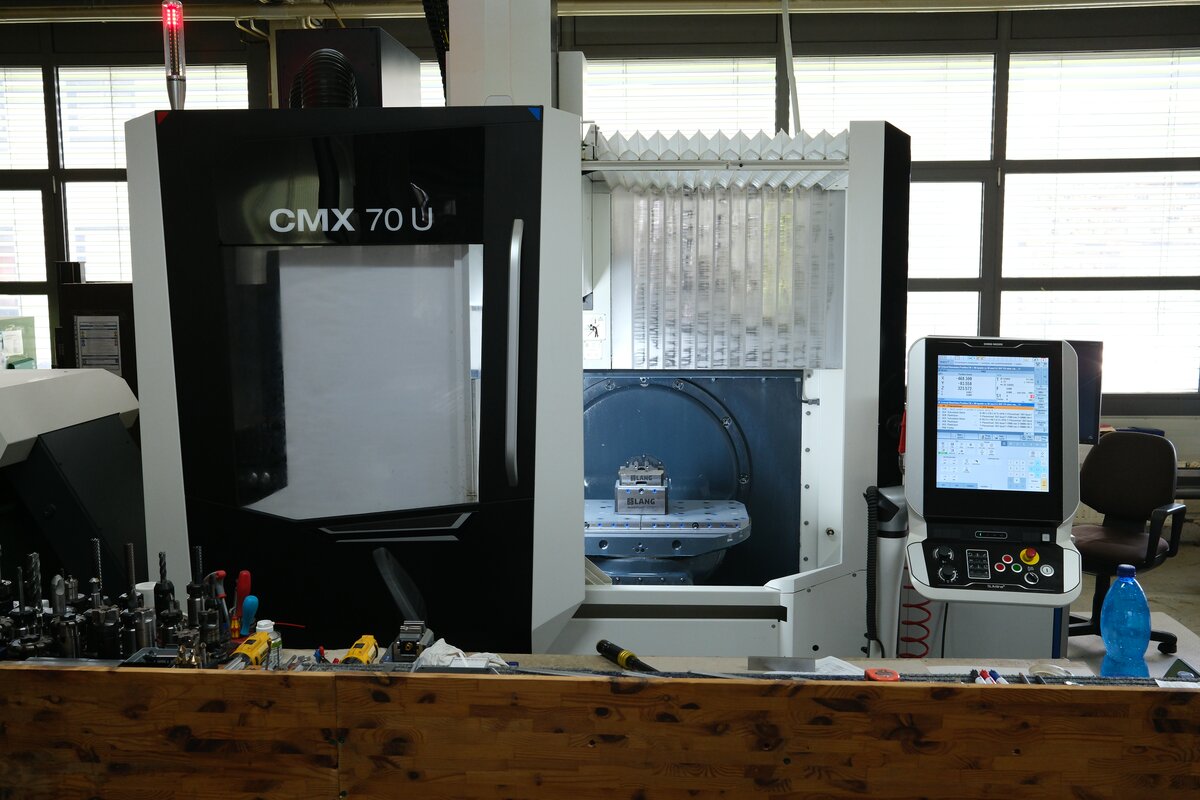
All parts are machined on our machining centres. The fixture is then assembled and adjusted.
Function check
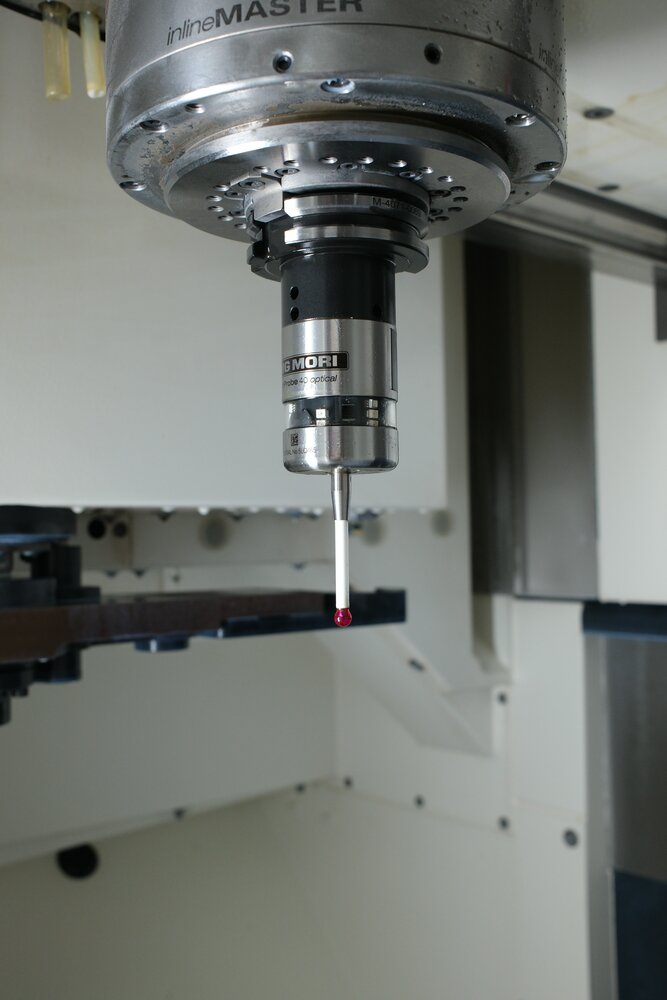
We check location, clamping and seal fit with your sample parts. An inspection report is available on request.
Changes and spare parts
New variants, changed ports or worn adapters: we adapt the fixture, including fixtures from other manufacturers.
Built in-house
We machine base plates, nests and sealing adapters ourselves. That keeps lead times short and makes changes quick.
Questions about leak test fixtures
What is a leak test fixture?
A leak test fixture holds a part, seals its openings with sealing adapters and connects it to a leak tester. The tester pressurises or evacuates the part and detects leaks, for example through pressure decay. The fixture makes sure every part is clamped and sealed the same way.
Do you also supply the leak tester?
No. We build the mechanical fixture with nests, sealing adapters and clamps. The leak tester and controls are provided by you or your system integrator. Ports and sensors follow your specification.
Which test methods are the fixtures suitable for?
Mainly pressure decay and differential pressure testing with air, as well as flow and water immersion tests. Helium leak testing places special demands on seals and materials, which we clarify with you case by case.
What do you need for a quote?
A drawing or 3D model of the part, the test method, test pressure and medium, your leak tester and the quantity. It helps to know whether clamping should be manual or pneumatic.
Up to which test pressure do you build?
You specify the test pressure and we size clamps and adapters accordingly. For higher pressures we agree pneumatic or hydraulic clamps and guarding with you.
Can worn sealing adapters be remade?
Yes. We remake adapters to drawing or sample, also for fixtures we did not build. If documents are missing, we capture the geometry by reverse engineering.
Is there a minimum order quantity?
No. Every fixture is a one-off for your part. We also build several identical fixtures for parallel test stations.
Related services
Leak test fixture inquiry
Send a drawing or 3D model of the part by email, together with test pressure and leak tester. You receive a quote within 24 to 48 hours.